

Learn the common reasons and expert solutions for why does your car shake on acceleration. Understand how engine problems, tire imbalances, suspension problems and drivetrain faults cause vibrations and learn how to diagnose and repair them for a more comfortable, safer ride.
Car Shakes When Accelerating, Any driver can be alarmed and annoyed when encountering the car shaking while accelerating. This shaking or vibration is usually an indication of some underlying mechanical or structural problem that needs attention as soon as possible. Whether it’s a subtle tremor or a more pronounced vibration, it’s essential to grasp the reasons behind this phenomenon to ensure the safety and performance of your vehicle. In this article, we will delve into the most common reasons why your car shakes when accelerating, the scientific understanding behind these problems, and practical solutions to help you get rid of them. From novice drivers to automotive aficionados, this comprehensive guide caters to a wide audience, ensuring that everyone benefits from its insightful knowledge to help maintain their vehicles in top condition.
Why Does a Car Shake When You accelerate?
 The vibration sensation that occurs during acceleration in a car is generally caused by imbalances or faults in components that are responsible for power transfer and stability of the vehicle. These issues are worse during acceleration because there are more forces acting on the problem areas. These can be attributed to engine issues, drivetrain issues, wheel and tyre problems or suspension problems.
Engine-Related Causes
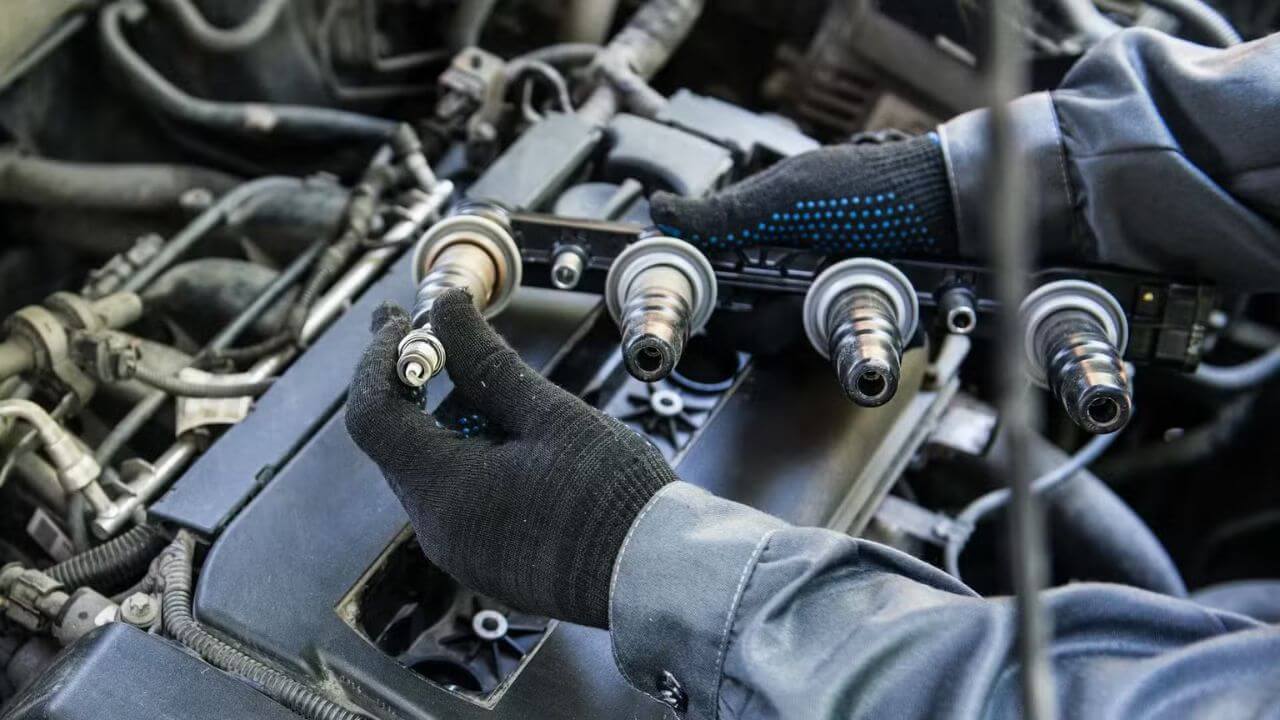
One of the main causes of a car shaking on acceleration is engine misfire. Engine misfires are the result of a situation in which one or more cylinders fail to ignite the fuel-air charge sufficiently, which alters the even power output of the engine and produces vibrations that the driver can detect. The most common reasons for this are worn spark plugs, faulty ignition coils or clogged fuel injectors.
Experts say “engine misfires affect the power delivery which becomes obvious as a shake during acceleration.” Spark plug and ignition system problems need to be addressed as soon as possible to avoid further engine damage, according to Zerby Automotive Expert. If these issues are not addressed, they can lead to a decline in engine performance and increased fuel consumption.
In addition, factors such as a dirty air filter or faulty sensors can interfere with the combustion process, indirectly contributing to vibrations as the engine struggles to deliver consistent power.
Wheel and Tire Issues
Tires and wheels are responsible for a smooth acceleration. The car will start to shake if the tires are damaged or unbalanced, especially when driving faster. These include uneven tire wear, improper inflation, or bent rims. Loose lug nuts make the problem worse by causing the wheels to wobble while moving.
A damaged drive shaft or bent axle may also cause shaking. And even slight bumps with curbs and potholes can distort these parts, causing vibrations that are amplified when the car speeds up.
Keeping tires well-maintained, rotated, aligned, and balanced is crucial. Failure to consider these will not only result in discomfort while driving, but will also cause premature tire and suspension wear.
Suspension and Drive System Issues
The suspension system cushions the impacts and keeps the tires in contact with the road. For example, worn-out shocks, struts, or control arms could affect your vehicle’s stability, making it shake noticeably when you accelerate.
Worn or damaged components of the drive train, such as universal joints (U-joints) and constant velocity (CV) joints, can be sources of vibrations. These joints transfer the torque from the engine to the wheels – any wear or damage leads to uneven power transmission and causes shaking.
Transmission and Brake System Problems
Significant transmission issues are also responsible for causing vibration in your car. For instance, low or dirty transmission fluid can result in harsh gear shifts that convert to shaking when you step on the accelerator. In addition, jammed or distorted brake calipers that drag on the rotors can cause vibrations that are felt during driving and become worse with increased speed.
In conclusion, there are a lot of factors that can cause a car to shake on acceleration, and a systematic approach to troubleshooting can help get to the bottom of the issue.
Vibration Research Inside vehicles
Vehicle vibrations are the result of a complex interaction of mechanical and dynamic influences throughout the whole system. As a body of scholarship, this complexity is highlighted in great detail.
A research paper by Guo et al, 2022 points to the suspension system’s role in dampening the vibrations of the vehicle. Their studies in semi-active suspensions with controlled feedback control are presented, in which it is shown that by improving suspension responses the intensity of vibrations during acceleration and driving is reduced substantially. These insights guide today’s automotive engineers as they design vehicles that are stable and comfortable in the face of dynamic loads.
Further scientific research indicates that vibrations are not concentrated only on the engine or wheels but rather in the entire vehicle structure with mounts, panels and tires. Knowledge about these details increases accuracy in diagnosis and drives development in automotive engineering.
How to Diagnose and Solve the Problem
It’s important to accurately diagnose a car shakes when accelerating problem in order to successfully solve it. Here’s a step-by-step approach:
Inspect Tires and Wheels: Check tire pressure, look for uneven wear, and inspect for visible damage to rims. Have the wheels properly balanced and aligned. Loose lug nuts must be tightened to manufacturer specifications.
Check Engine Performance: Inspect spark plugs for fouling or wear, check ignition coils, and look to see if fuel injectors are clogged. Replace faulty parts as soon as possible to return engine performance to normal.
Drivetrain and Suspension: Check for bent axles or damaged driveshafts, worn U joints, and deteriorated CV joints. Check shocks and struts for leaks or diminished damping performance Replace components which have become severely worn.
Transmission and Brake Inspection: Check the level and condition of the transmission fluid – change the fluid if it is dirty or low Checking for warping or sticking brake calipers and rotors, repairing or replacing them as needed
Routine Maintenance: Regular vehicle maintenance such as oil changes, air filter replacements and system tune-ups can prevent many common causes of shaking.
Any driver who suspects a significant mechanical issue should have the vehicle diagnosed professionally as soon as possible to prevent future damage or safety issues.
Expert Advice
Shorter version: If your car shakes when you accelerate, deal with it fast, says a Zerby Automotive expert. Loose wheels, worn suspension components and engine misfires are frequent causes. Get it repaired as soon as possible – if this problem is left to become more serious, it can cost more to fix. This makes early diagnosis and repairs even more critical to ensure optimal vehicle performance and safety.
Results
A car shaking when you accelerate is a problem that’s likely caused by a deeper mechanical issue, and shouldn’t be denied. Whether the vibrations result from engine misfires, tire and wheel imbalances, suspension wear or drivetrain defects, they deteriorate driving comfort and can compromise safety.
Extensive research has been conducted to understand the intricate nature of vehicle vibrations, validating the need for precision engineering and regular maintenance. This means that vehicle owners should stay vigilant, performing regular inspections and addressing any signs of shaking promptly.
Ultimately, being aware of the causes and solutions to a car that shakes on acceleration helps drivers ensure their smooth, safe operations. Not only do timely repairs and proactive maintenance prolong the lifespan of your vehicle, they also contribute to the overall driving experience.
