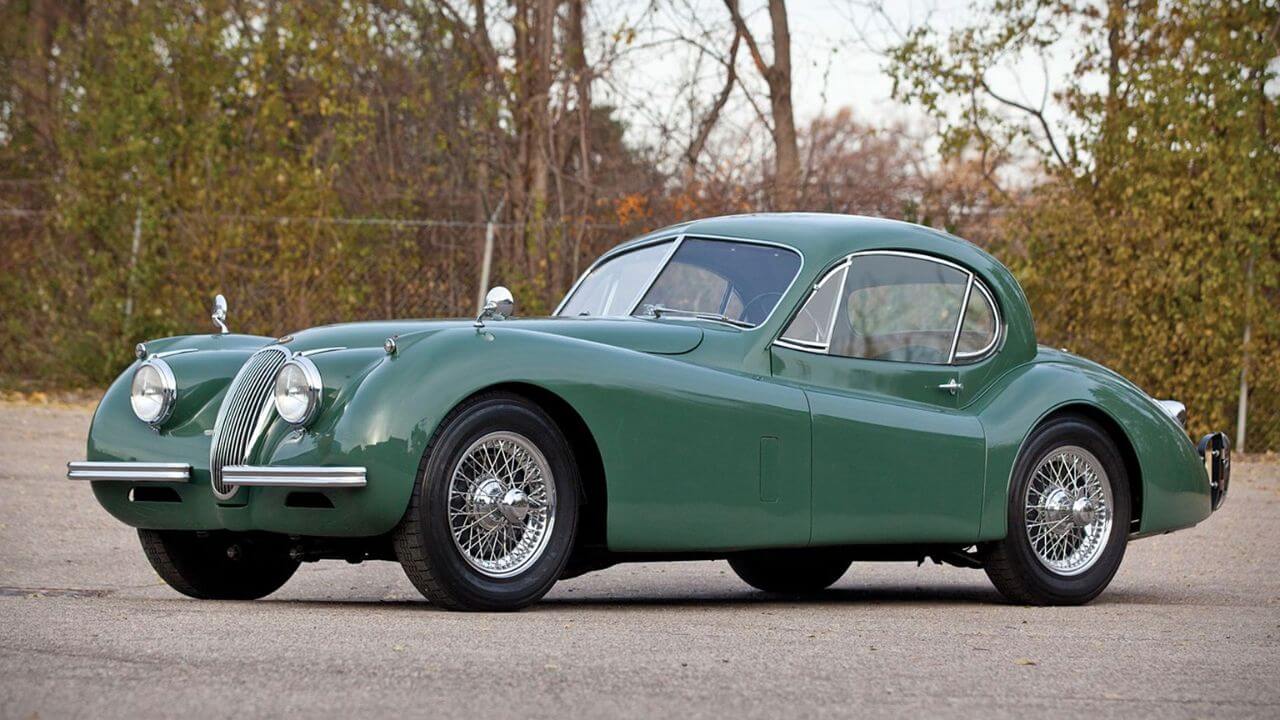

Discover the legendary Jaguar XK120 Coupe 1948, an archetypal British sports car that combined a breakthrough performance, sleek style, and unchallenged luxury. Find out about the engine it has, what is in its interior, and its long history in the car industry.
Jaguar XK120 Coupe 1948 is one of the turning points in the history of the automotive industry, combining the latest engineering technologies, beautiful design, and a powerful engine. At its launch, the Jaguar XK120 Coupe 1948 was not only a show of British ingenuity after the war but also the fastest production car in the world, able to accelerate up to 120mph. This combination of doxiness and sophistication remains appealing to car lovers and collectors, and the XK120 coupe has become a symbol of classic sports cars, which established a high reputation of Jaguar.
Jaguar XK120 Coupe 1948: Power and Prestige.
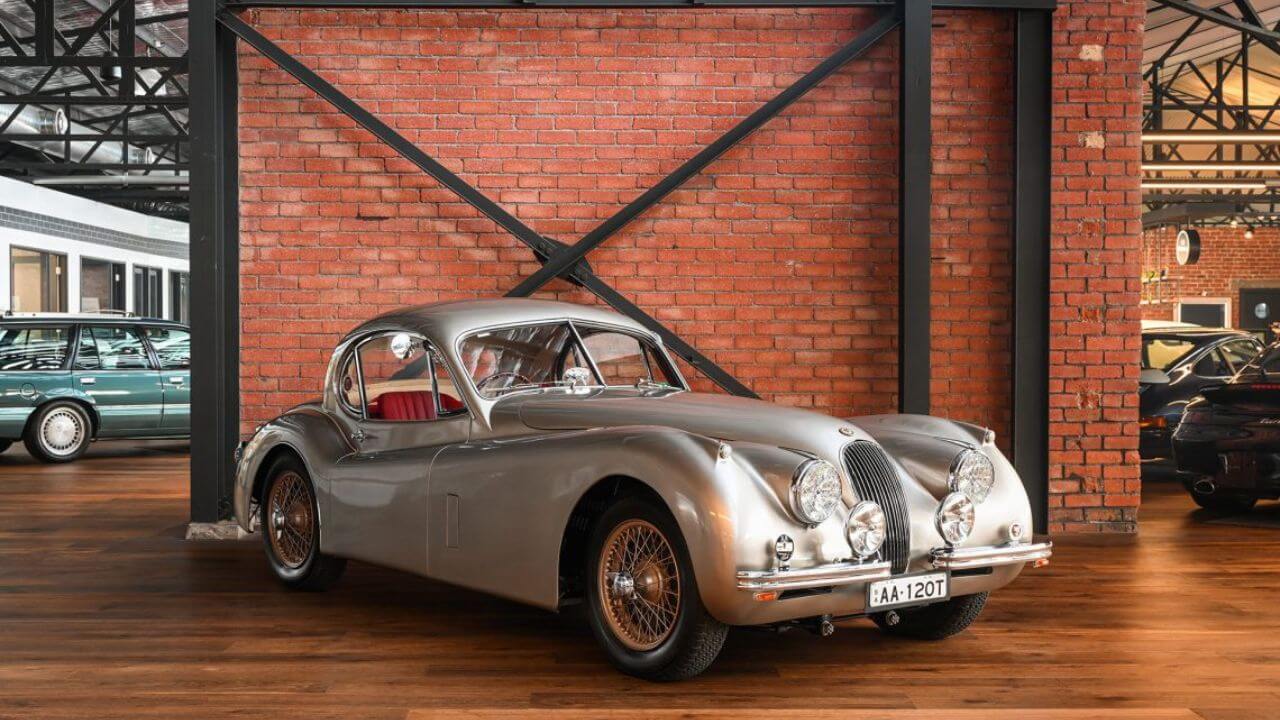 A closed-body version of the previous roadster was released as the Jaguar XK120 Coupe 1948 which expanded the popularity of the Jaguar XK series revolution. Constructed on a steel frame and hard steel floorpan rather than plywood, the couple provided a level of extra durability and weight to balance luxury and performance. It had the all-new 3.4 liter dual overhead cam straight-six XK engine in Jaguar, a style of engine that drove Jaguars decades.
It was an engineering masterpiece: an inline-six, 3441 cc with twin overhead cams with 160 baptiste horsepower at 5,000 rpm and 195 lb-ft of torque at 2,500 rpm, which supplied all the power needed of its day in a smooth and powerful manner. This was enhanced in the Special Equipment (SE) edition of the early 1950s with increased power of about 180 bhp with high-lift cams and stronger valve springs to produce a quicker response and livelier acceleration. The couple could go 0-60mph in approximately 12 seconds, which was very fast for the era, and could go up to its namesake 120mph with ease.
The Jaguar XK120 Coupe 1948 had the following engine specifications:
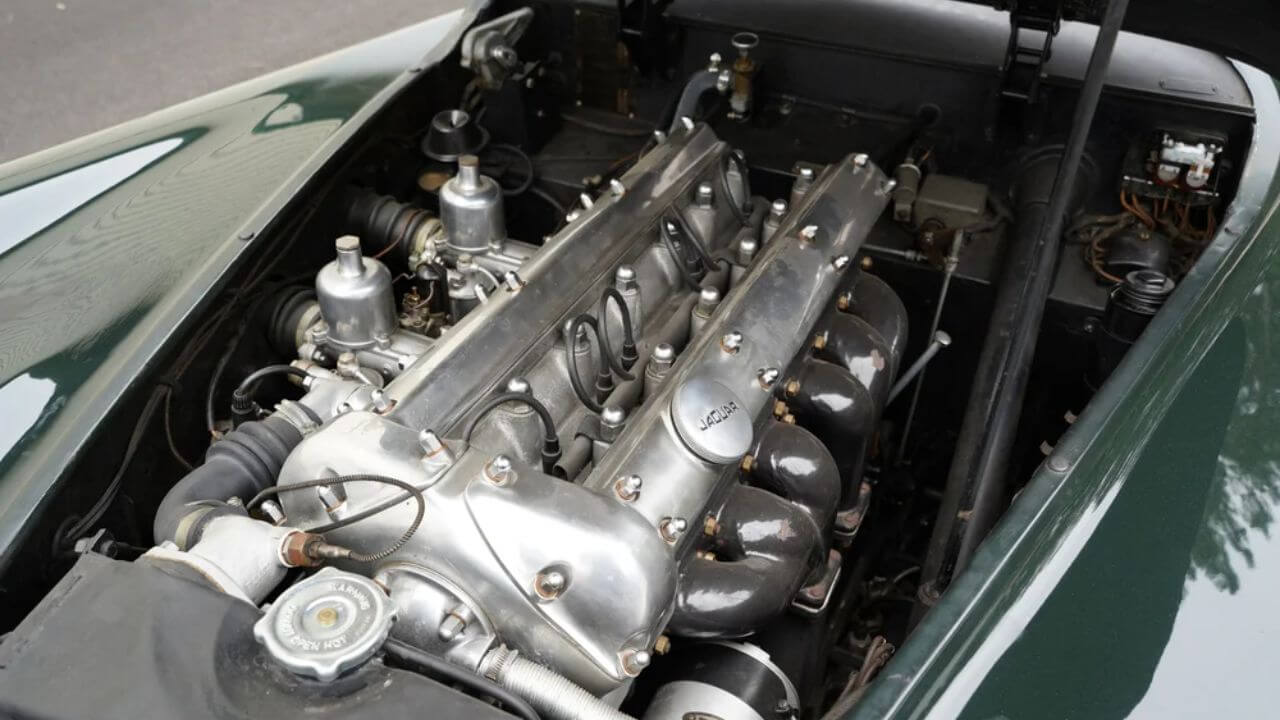
- Engine: 3.4L Inline 6-cylinder, Dual Overhead Camshaft (DOHC).
- Displacement: 3441 cc (3.4 liters)
- Power Output: 160 bhp at 5,000 rpm (standard), 180 bhp in the Special Equipment (SE) model.
- Torque: 195 lb-ft at 2,500 rpm
- Carburetor: dual SU H6 carbureters, updated to H8 in some racing models.
- Compression Ratio: 8:1 (standard) with some performance variants higher.
- Fuel Delivery: Carburetion
- Ignition: Coil ignition system.
- Cooling: Water-cooled
- Transmission: The transmission is 4-speed with synchromesh on the 2nd, 3rd and 4th gears.
- Drivetrain: Rear-wheel drive
- Top Speed: 120 mph (193 km/h) or thereabouts.
- Acceleration: 0 to 60 mph in approximately 12 seconds.
This engine was distinguished by its high design and because of its reliability, it laid the foundation of the success of Jaguar in road and racing cars in the coming decades.
Interior Design: Old-fashioned Lavishness and Utilitarian Luxury.
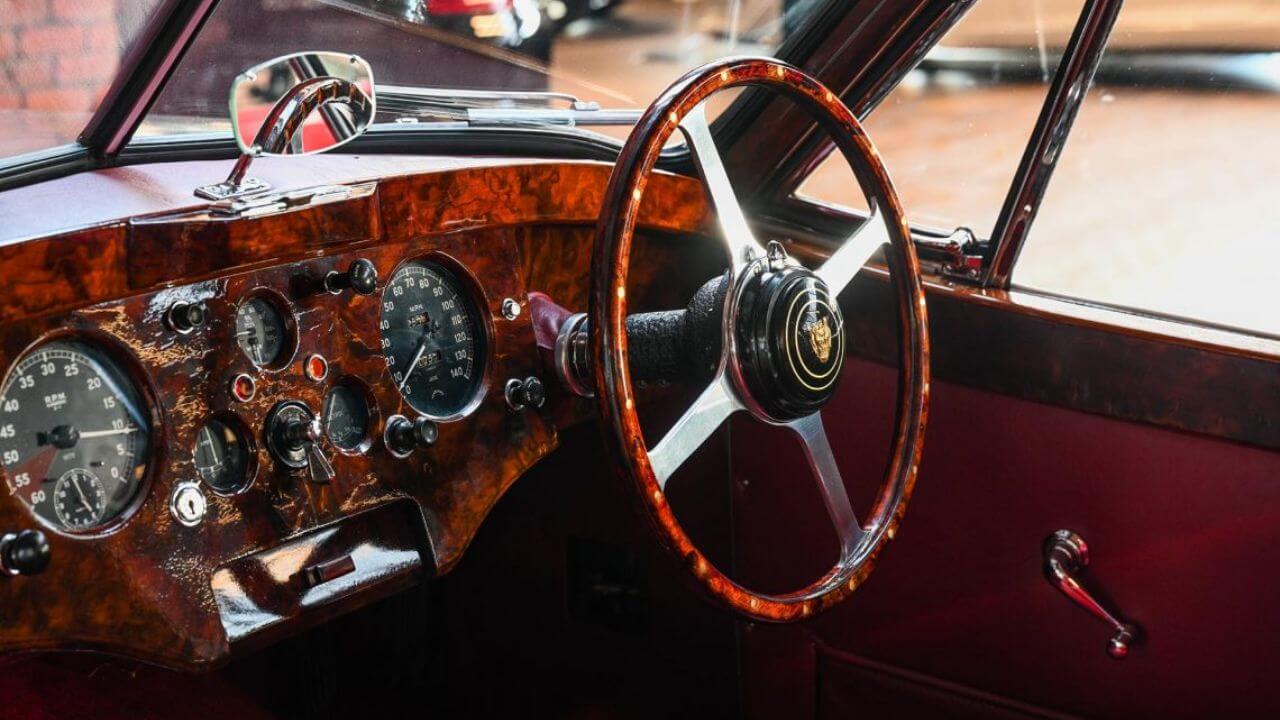
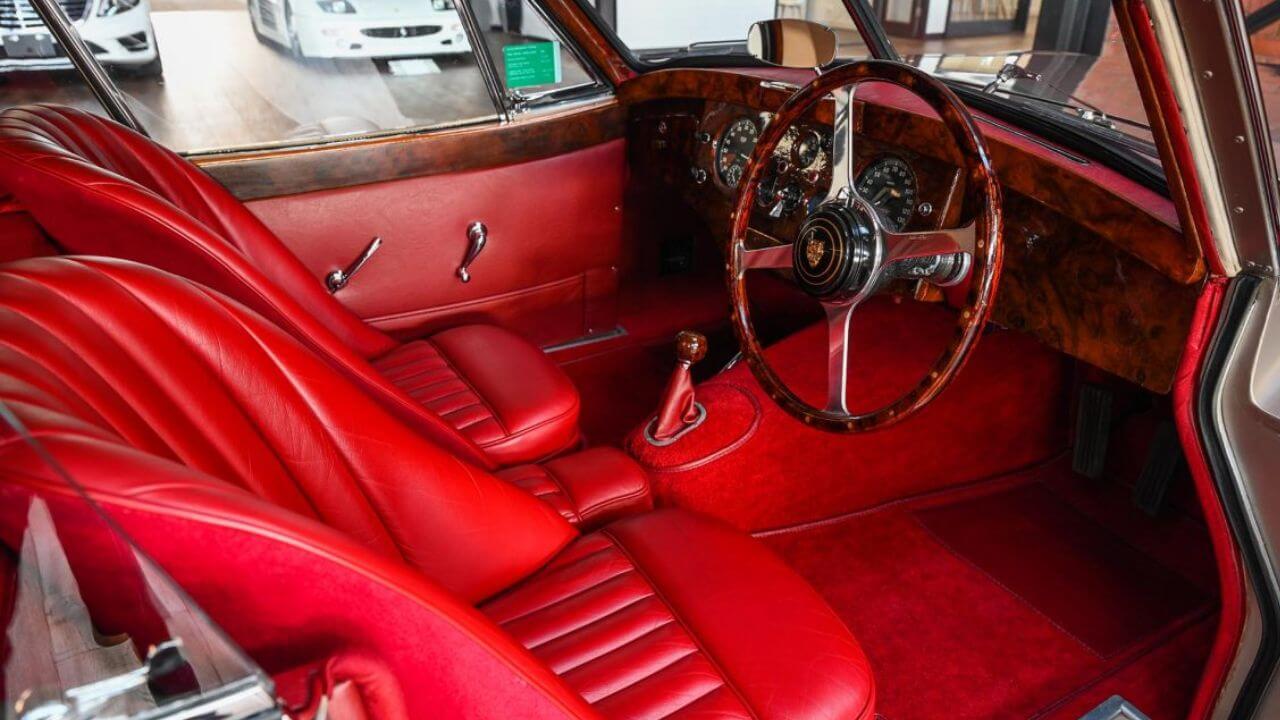 Within the Jaguar XK120 Coupe 1948, it was all about comfort and craftsmanship and the type of environment that fused sportiness and the sophistication of a high-end British car. The interior was designed according to the design patterns of larger Ford cars such as Jaguar Mk VII, with beautiful-hand-veneered walnut dashboards and door cappings. This woodwork was a good match to the good leather upholstering the seats and door panels, which presented comfortable and long-lasting luxury.
Other modifications were the inclusion of chrome fittings, a well designed wooden-rimmed steering wheel and instruments well positioned to be convenient to the driver. The closed roof of the coupe made it more of a quiet place to be rather than the open roadster where the wind and weather distracted the human senses and the car’s perfect finish and materials. The coupe also had convenience items like wind-up windows, footwell ventilation, two inside lights, and a glovebox to the practical appeal of the car.
 According to the words of classic cars expert and enthusiast, Andrew Frankel, the Jaguar XK120 coupe was the first of its kind, and it did not only perform gloriously, but also proved that a sports car could be as comfortable a tourer as it could be.
Jaguar XK120 Coupe 1948 Driving Experience.
The Jaguar XK120 Coupe 1948 was (and continues to be) a marvel on paper, but its driver experience combined both the sensation of speed with the smoothness that Jaguar is known to offer. The chassis was a torsion bar, wishbone, live rear axle, leaf spring, independent front suspension with a balanced but sporting ride. The steering was exact as at the time, but the manual Moss four speed gear box took a trained hand to shift smoothly.
This gave the coupe a heavier feel compared to its lightweight alloy roadster counterpart, which had a slight impact on its agility but made it feel more attached and stable on the road. Its drum brakes that were common at the time were occasionally vulnerable to fading when heavily used, yet they worked in the favor of rendering the vintage driving experience authentic. The XK120 coupe was also as graceful and steady in high speed as it was in spirited weekend driving, although with its quirks.
Legacy and Cultural Impact
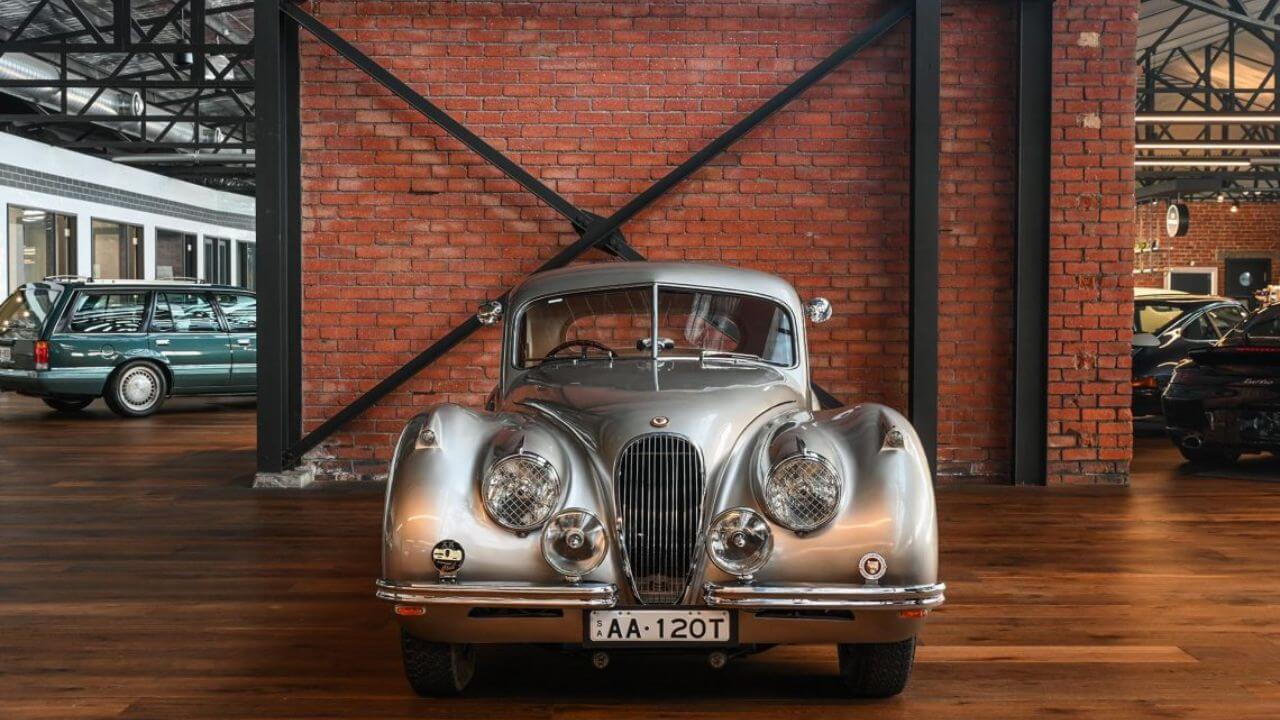 Jaguar XK120 Coupe 1948 is not merely a classic car; it is the post-war revival; the British industrial strength and the car brilliance. Being the pioneer of Jaguar to introduce the iconic engine of the company, the XK, the car pioneered future generations of sports cars. Its design and performance are also influential and the couple is frequently mentioned among the most beautiful cars of all time that is both smooth in aerodynamics and classic.
The XK120 is now much sought after by collectors, especially early roadsters and coupes, and a restoration project can be an attempt at lovingly recreating the original specifications of the car. The same Modern Jaguar Classics have even partnered with well-known celebrities to recreate the bespoke versions of the XK120 to show its timeless appeal and significance in the motor vehicle history.
Summary: A Rooney Masterpiece.
A perfect combination of engineering inventions, beautiful design, and outstanding performance demonstrates the Jaguar XK120 Coupe 1948. It was a game-changer at the time, not only because it was the fastest production car but because it was a most perfect looking embodiment of British motoring pride. Its efficient and powerful 3.4 liter XK engine, well thought-out interior and its unusual combination of luxury and sportiness still impress amateurs all over the world.
Since it has great historical value and can never be out of fashion, the Jaguar XK120 Coupe 1948 will continue to be the standard that defines a classic car that is admired and respected by both the collectors and drivers. The XK120 was undoubtedly a step and a benchmark that marked the future of Jaguar – a step that resonates throughout the history of the automotive industry.
