

Discover the essential role of cv axle grease in vehicle performance and longevity. Learn about types, maintenance tips, and expert insights to keep your drivetrain smooth and reliable.
When it comes to maintaining a vehicle’s drivetrain, very few components are as important, yet ignored, as the CV axle grease. This particular type of lubricant is important for making sure that constant velocity (CV) joints move smoothly, with minimal friction and wear, while withstanding the stresses of vehicle operation. CV axle grease is necessary not just for the life extension of the axle assembly, but also to ensure the safety, performance and comfort of your ride. Without the proper type of grease and proper maintenance, the CV joints can fail prematurely and cause expensive repairs and poor vehicle handling. This blog delves into the all-encompassing significance of CV axle grease, its types, usage, and insights from experts, specifically for automotive enthusiasts, mechanics, and vehicle owners interested in maintaining their vehicles in optimal condition.
Understanding CV Axle Grease and How Important It Is
CV axle grease is a specially designed lubricant that is formulated to protect the CV Joints, which transfer power from the vehicle transmission to the vehicle wheels while permitting the up and down motion of the suspension and steering articulation. The unique demands placed on CV joints – high loads, constant movement and exposure to dirt and moisture – requires a grease with exceptional lubrication properties, oxidation resistance and the ability to maintain consistency under extreme pressure and temperature variances.
Unlike general-purpose grease, CV axle grease will often have specific additives like molybdenum disulfide (moly) and graphite to help give it properties that withstand heavy spot loads and reduce metal-to-metal contact inside the joint. These additives embed themselves onto metal surfaces providing a protective film that reduces wear even under shock or impact conditions. Furthermore, the grease is typically lithium based, which offers excellent water resistance and ensures that the grease is not compromised inside the sealed CV boot in the face of harsh environmental challenges.
Types of CV Axle Grease: Formulation is Important
 Not all greases are compatible with CV joints, and using the incorrect lubricant can result in joint damage and failure. In general, CV axle grease is divided into:
Molybdenum Disulfide Lithium Complex Grease
This is the most common and recommended one for CV joints; especially outer joints with six large ball bearings. The heavy duty lithium complex base has a good thermal mechanical stability, while molybdenum disulfide helps reduce the friction and wear under high pressure. This grease supports the hard work CV joints have to do and keeps it effective for long periods of time, which is something experts believe is key to getting the drivetrain to last a long time.
Tripod Joint Grease
Tripod joints, commonly used needle roller bearings, must be made in a lighter formulation without solid additives such as moly which can affect bearing movement. Tripod joint grease can typically be softer and is engineered to fill the tight tolerances and specific load characteristics of these inner joints.
Specialty Synthetic Greases
Advanced synthetic formulations, such as synthetic moly greases offer added resistance to oxidation, water washout, and temperature extremes. High-performance synthetic greases are also widely used in motorsports and for vehicles exposed to severe conditions, and offer superior protection and longevity.
The Science Behind CV Joint Grease Performance
Research from academic sources points to grease degradation directly affecting the functionality of CV joints. Studies show the physical and chemical properties of the grease deteriorate with time and use from the mechanical and thermal loads the bearings on the axle joints experience. Oxidation and penetration in the grease causes increased friction and wear within the joints, which can often contribute to noise, vibrations, and eventual joint failure.
Advances in testing techniques, such as infrared spectroscopy and friction testing, have demonstrated uniform distribution and retention of grease are vital to maintaining joint performance. Regular maintenance to replenish or replace CV axle grease can greatly reduce the rate of early joint wear out and vehicle vibrations, which ultimately will extend the life of the inner and outer CV joints.
Expert Quote On CV Axle Grease Importance
Dr. Lee Chul-Hee, a well-known mechanical engineering researcher in vehicular tribology, points out:
The proper selection and maintenance of CV joint grease plays a paramount role in the life and smooth function of constant velocity drive axles. “Proper lubrication not only reduces frictional losses but also helps to reduce noise and vibration, which helps towards vehicle safety and comfort.
Application and Maintenance: Best practices for CV Axle Grease
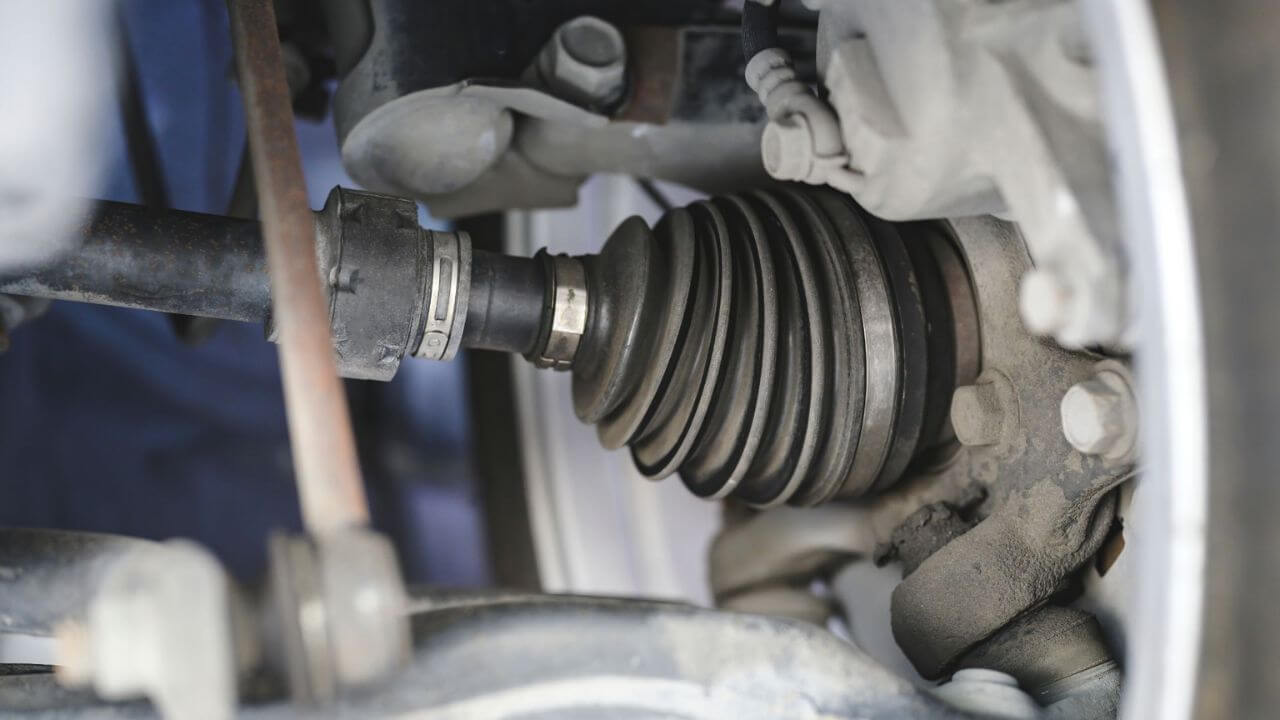
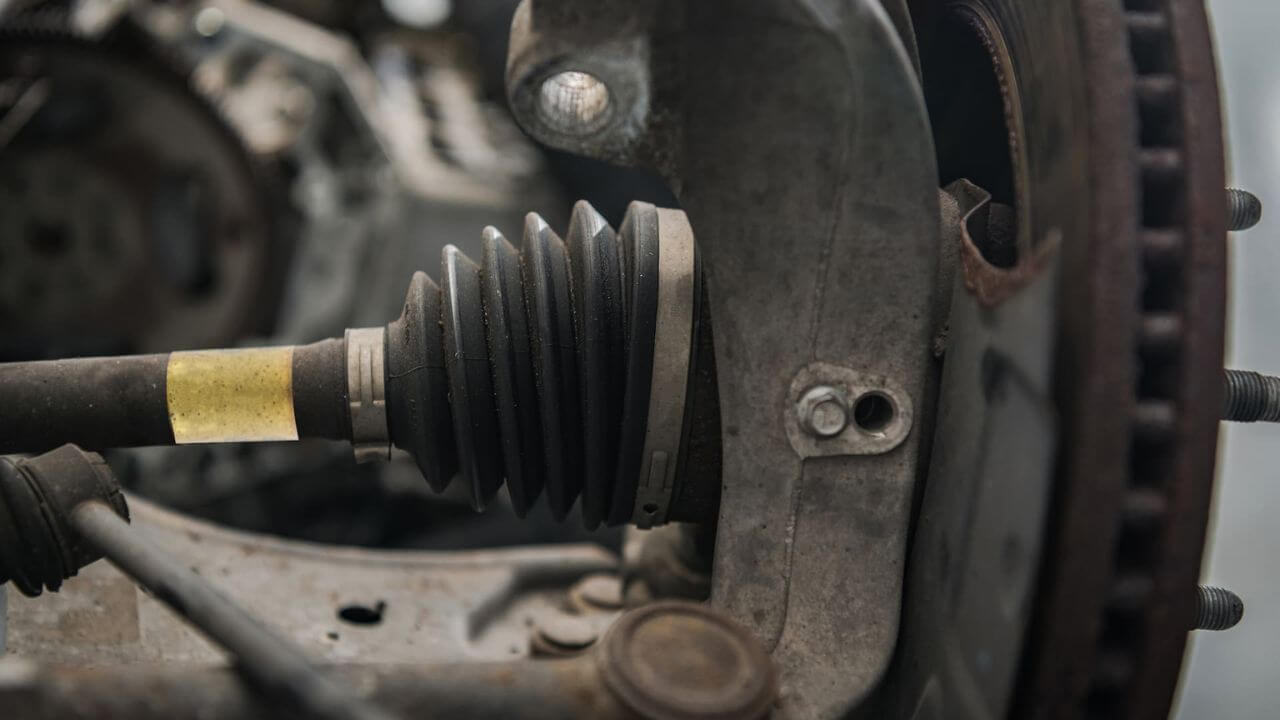
 Applying CV axle grease properly and maintaining it over time is as important as the choice of the appropriate grease. Most CV joints are sealed within rubber or plastic boots that help protect the grease from contamination. When a boot is torn or worn, grease can leak out and contaminants can come in, causing joint integrity to be compromised.
The greasing process depends on whether the CV boot is intact, torn or being replaced. For small repairs, it is enough just to apply a high-quality lithium complex moly grease inside the boot and reseal the clamps. In cases of torn boots or joint rebuilds, complete cleaning of old grease and contaminants and application of new grease insures optimum protection. The use of degreasers and drying components before re-greasing protects from accelerated wear.
Car manufacturers generally recommend inspection of the CV boots at routine service intervals, usually every 30,000 kilometers with greasing required or at boot replacement. Neglecting to grease the CV joints regularly or allowing any leakage of grease can cause the CV joints to wear rapidly, resulting in vibration when driving, knocking sounds, and potential failure of the drivetrain.
Why CV Axle Grease Is Important For Your Vehicle Safety And Performance
The CV axle and the grease in which it is housed directly impacts how the vehicle handles and drives. A properly lubricated CV joint will allow for smooth power transmission to the wheels at any steering angle or suspension movement. This ensures consistent traction, vehicle stability and driver control.
Poorly lubricated joints have more internal friction giving off heat, which leads to faster wear. Resulting noises and vibrations not only decrease the comfort of riding but can also affect the safety of driving. In worst cases, a failed CV axle can blow apart and cause the loss of wheel control.
Furthermore, proper lubrication helps minimize drivetrain losses, which improves fuel efficiency and reduces emissions. With environmental concerns increasing, keeping your CV axle grease in good shape is part of sustainable vehicle operation.
Results
In Results, CV axle grease is a specialized yet essential component of modern cars that helps to ensure the efficient and reliable operation of constant velocity joints. Choosing the proper kind of grease (usually a lithium complex with molybdenum disulfide) and keeping it in proper condition can greatly prolong the life of your vehicle’s axles while improving safety and comfort and performance. Recognizing the importance of this often-overlooked lubricant, as well as following the best practices for its maintenance, can help avoid costly repairs and keep the vehicle running smoothly for miles to come. Whether you’re a mechanic, vehicle enthusiast, or everyday driver, knowing about CV axle grease and its function represents responsible vehicle care consistent with expert research and industry standards.
This coverage is intended to reflect the current state of scientific knowledge and practical advice to understand the value and need for CV axle grease in automotive maintenance.
